
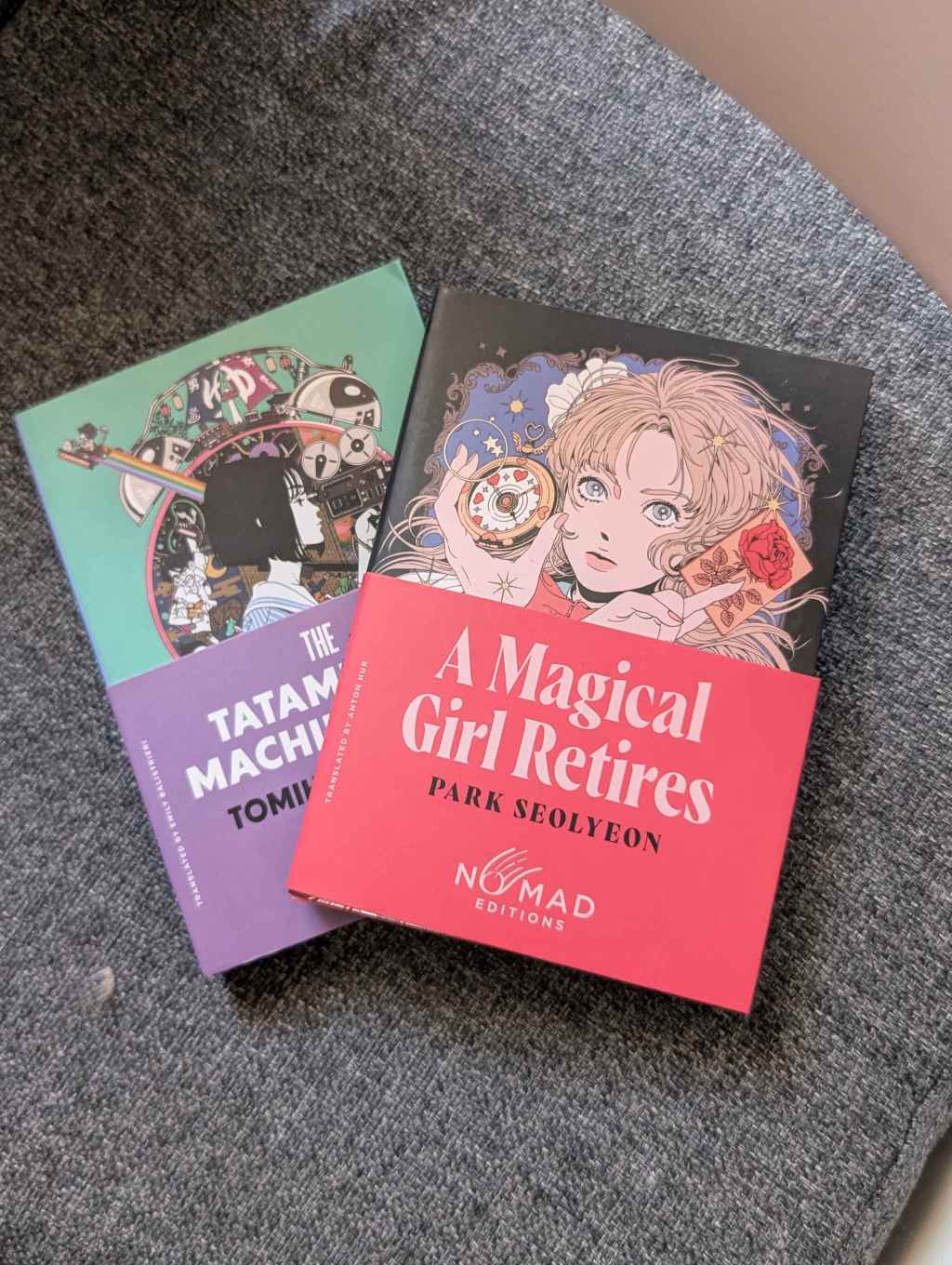
Quick vocabulary clarification if needed: a bunkoban (or 文庫本 if you want to see it written in its native language) is the name for a Japanese format of small paperback that are typically cheaper than regular sized books. According to Wikipedia, they’re typically 4.1″x5.8″ in size (or 105x148mm if you’re from a place that doesn’t use the wild wacky imperial system like I do) and have a dust cover on top of another cover. They’re pretty neat. I’ve become quite obsessed with them lately.
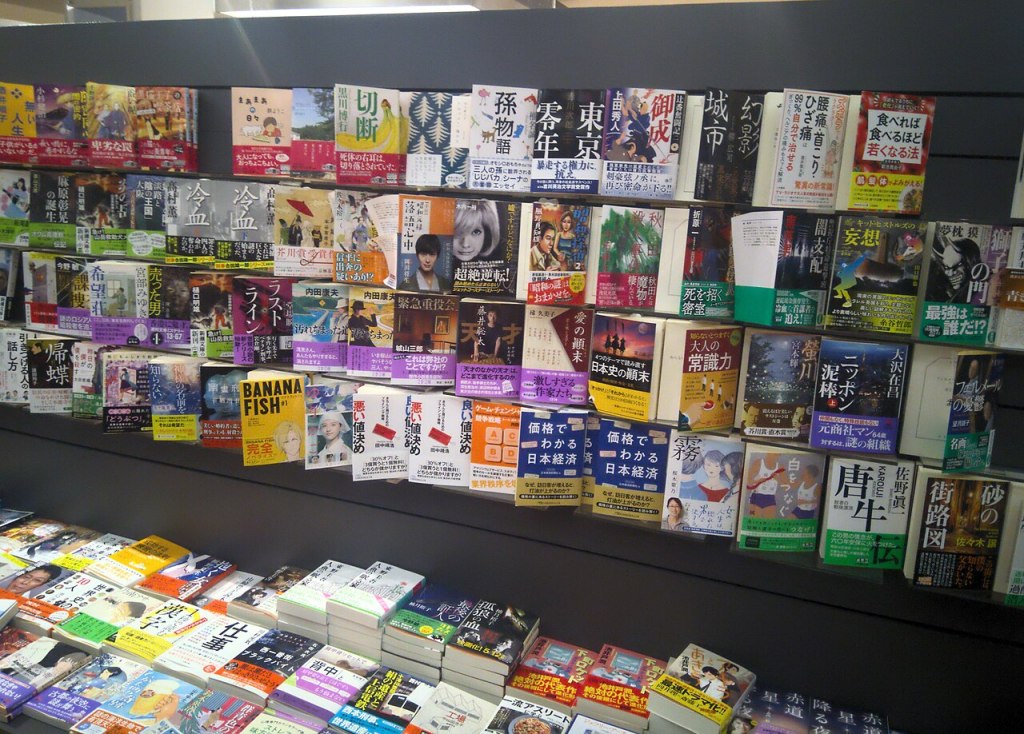
I recently went on a trip to Chicago to see my girls TWICE (it was fantastic) and of course I had to hit up the nearby Mitsuwa food store because the selection for Asian food stores in my area is pathetically low in that there are absolutely none. The Mitsuwa, delightfully enough, has a Kinokuniya bookstore conjoined to it which meant I got to browse their somewhat limited selection and beheld a wonderful sight: it was The Tatami Galaxy! In English! In bunkoban format! Dust wrapper and everything! I was in awe and immediately purchased it after looking through their nearby pin selection.
It turns out that HarperCollins is now publishing books in a sort of makeshift bunkoban fashion with their line of Nomad Edition books. I’m not sponsored or anything by them in any capacity so this is an endorsement because I think this is cool as hell and not because I want to sell all four readers of my blog on these books. The Tatami Galaxy was just the first of the books in this format that I found and I was thrilled to find out there were more and have since purchased them all. They include the aforementioned The Tatami Galaxy by Tomihiko Morimi but also include…
- Almond by Won-Pyung Sohn
- Counterattacks at Thirty by Won-Pyung Sohn
- A Magical Girl Retires by Park Seolyeon
- The Tatami Time Machine Blues by Tomihiko Morimi
- Towards Eternity by Anton Hur
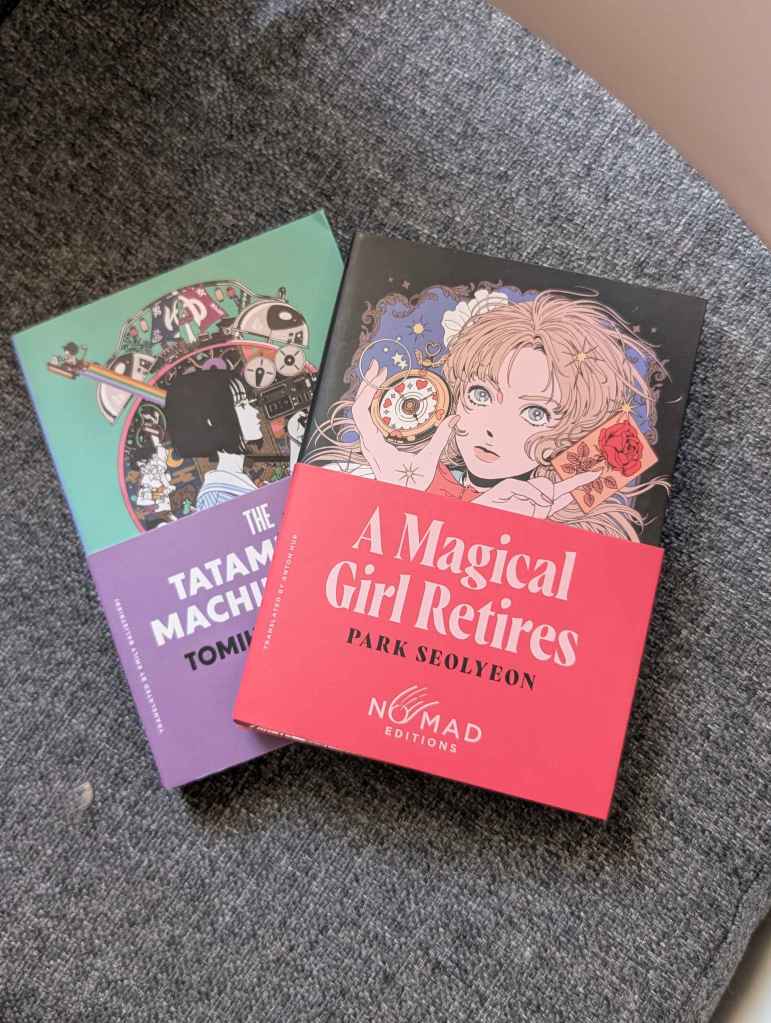
It’s an eclectic selection for sure but they’re also all authors of Asian ethnicity with 5 out of 6 of them being originally published in a non-English language. I love trying to read but getting swamped by other things but one of my biggest complaints is the market for books published in Japan. The books that are brought over here such as Days at the Morisaki Bookstore or Before the Coffee Gets Cold are usually comfort food for the soul and traditionally smaller in order to be light reads. They might even be published in a bunkoban format because of such. When they come over to the West (barring Before the Coffee Gets Cold but I still have my qualms with the publishing format of those books), they’re sized up to the typical western idea of how a book should be sized. I absolutely loathe that. I absolutely detest the size of books as they come in book stores. I love to read wherever I can but cannot stand carrying around a hulking tome like a Brandon Sanderson fantasy tome that weighs as much as a newborn. I’m also a big fan of the physical book experience so I refute the usage of tablets. It just doesn’t give me the FEEL, you know? This is why these Nomad Editions have me so psyched that I had to blog about them. I’m getting books I can take to places without large covers that seem only engineered to advertise to the surrounding world what book I’m reading and I get editions of books I’ve been wanting to read anyways.
I’ve long since had A Magical Girl Retires in a digital format on my phone because it just seemed like such an intriguing concept but I struggle to read novels in a digital format like I mentioned. I can’t become engrossed because it just ends up feeling like some new form of work for me to undergo. It’s exciting for me to see some new publisher is trying to take a concept from Japan that isn’t a new food craze to try to cash in on like matcha or ube. It’s a practical development that I’m supremely excited about and have already read through half of the previously mentioned books since I arrived back from Chicago. Those novels being The Tatami Galaxy, The Tatami Time Machine Blues, and Almond.
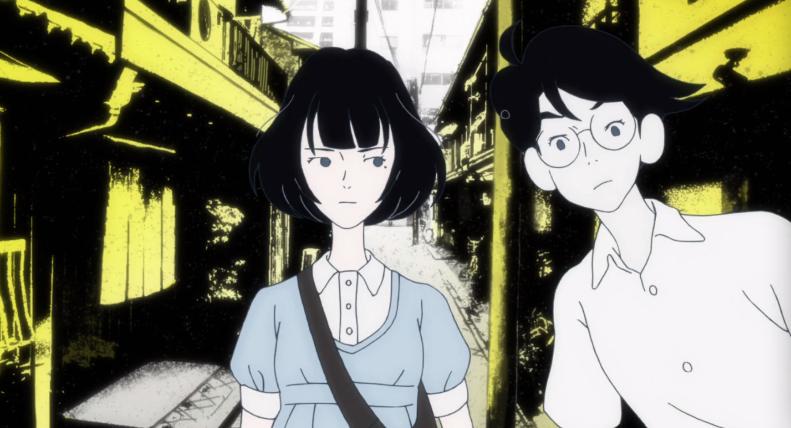
I’m not going to lie here: The Tatami Galaxy is one of my favorite anime of all time but the novel benefited so much from the team who adapted it. It becomes exhaustingly tedious to read through the same phrases over and over and lay witness to an author spout out the landmarks of Kyoto in relentless succession in certain spots. The Tatami Time Machine Blues is also a mild slog that feels uninspired and unoriginal that bored me in both anime and novel format. Almond, however, was an absolute poignant winner of a book that rendered me fighting back mild tears at the coffeehouse I was reading it at. If you have to pick up one then maybe make it Almond. It’s paced well enough to keep you entertained and also has legitimate heart that translates well even if it can feel shallow in the beginning.
What I’m trying to communicate here is that I love this new format that I hope catches on and want to express my adulation for the damn thing. Light quick reads that are easily transportable may have been something I’ve been craving but never even knew. It also just makes me think more about my own personal philosophy as far as what a bunkoban can be for me as a person. It’s a short and entertaining experience that is only enriched because it’s so brief and able to go with me anywhere. Too often when I make purchases like for video games especially I end up trying to find out what the time sink required is. For forty dollars, do I get a great enough value? Is this worth it for twenty dollars? It becomes too much about the dollar per joy value. With these books, I got to go to my favorite coffeehouse and just soak in the atmosphere with a comfortable read and a healing beverage. I may have finished the quite short book in two quick sessions but the time evaporated away instead of being peeled away from my soul like with some other books I’ve read. Yeah, I may get five hundred pages for twenty dollars when I buy other books but the page count isn’t indicative of the pleasure I feel. I want shorter stories that stick with me because they impact me and not because I slogged through half a thousand pages and had to embrace the narrative to finish. It’s just something I’ve been chewing on.
I hope that HarperCollins does well with these editions and that I get more. As of the writing of this post, HarperCollins has announced three more titles including Hula by Jasmin ‘Iolani Hakes, People Who Talk to Stuffed Animals Are Nice by Ao Omae, and Salty by Kate Myers. Two of these books are not translated from one language to another which makes me wonder if initial orders weren’t substantial enough so HC shifted to more marketable books for the American bookstores but I’m not in publishing so what could I know? I’ll buy them all regardless even if I’m really not interested in the premise of Salty. I’m still optimistic and hopeful that I can have more tiny pieces of literary happiness. Let’s embrace the bunkoban and have more smaller moments with bigger stories!
Sorry for the non-anime related post but I have essentially been geeking out about these books to everyone just because I adore the concept. I basically talked about a Japanese product so it’s anime adjacent enough. I’ve been mildly swamped with some health and personal stuff so I’ve not been absorbed too much into blogging as you can tell. I did start a new anime podcast called Weeb Belong Together that you can listen to on Spotify by clicking on this text with my partner so please go check that out. I’ve also started Otaku Melancholy back up which you can also go check out on Spotify here if you want. Thank you for reading this blog post and my excitement over something as inconsequential as “tiny books”. I hope to see you all soon! Give me some book recs!


Leave a Reply